

Restaurant Losing Money? Where the Profit Leaks Hide
Restaurant losing money while sales look fine? Run a weekly profit leak audit on comps, food cost variance, overtime, delivery and vendor fees.
Read moreBlog & Insights
Guidance on food cost, prime cost, payroll, technology and running a more profitable restaurant — written by people who do this work every day.
Restaurant losing money while sales look fine? Run a weekly profit leak audit on comps, food cost variance, overtime, delivery and vendor fees.
Read more
Commissary kitchens can distort prime cost across concepts. See the gross-up and true-up methods that show each concept its real food and labor cost.
Read more
A Restaurant365 setup done right: clean chart of accounts, item and recipe mapping, tested POS integration and location groups before go-live.
Read more
Restaurant payroll mistakes like tip pool errors and missed spread-of-hours pay trigger real penalties. Here is how operators avoid them.
Read more
Financial accounting builds your P&L for taxes and lenders. Cost accounting tracks recipe cost and labor to drive daily restaurant decisions.
Read more
Multi-unit restaurant accounting: one chart of accounts, consolidated plus location-level reporting and unit benchmarking that surfaces problems.
Read more
Restaurant equipment costs run $75,000 to $250,000+. See category ranges, new vs. used tradeoffs, and how to prioritize revenue-generating spend.
Read more
How restaurant bookkeeping changes for LA delivery-first concepts: real commission rates, packaging costs, and California sales tax rules for 2026.
Read more
How restaurant dynamic pricing works in 2026, the real revenue lift it delivers, and why off-peak discounts beat peak surcharges every time.
Read more
Compare restaurant bookkeeping software by size and complexity. What QuickBooks, Restaurant365 and MarginEdge each do well, and where each one stops.
Read more
Learn what restaurant startup costs really include, from build-out to pre-opening payroll, plus how the IRC Section 195 tax deduction works.
Read more
Gift card sales are a liability until redeemed. How restaurants book sales, recognize breakage under ASC 606 and handle state escheatment rules.
Read more
Actual vs theoretical food cost compares recipe cost to real spend. A gap under 2 points is control; over 4 signals waste or theft. The math inside.
Read more
Not every NYC restaurant accounting firm does the same work. Here are the 5 types, what each one costs, and how to pick the right fit.
Read more
A restaurant CPA files taxes a few times a year. A controller manages the weekly numbers that control cost. How to tell which one you need.
Read more
A service charge is not a tip under IRS rules. The legal test, the payroll tax differences and why service charges never earn the FICA tip credit.
Read more
inKind advances cash against future sales. Book it as a liability, not revenue, or your P&L overstates. The journal entries and discount math.
Read more
The 4-4-5 calendar gives every period the same weekday mix, so restaurant weeks compare cleanly. How it works and when to switch.
Read more
The FICA tip credit refunds the employer share of Social Security and Medicare taxes on tips above $5.15 an hour. Eligibility, Form 8846 and the math.
Read more
The 12 restaurant KPIs that move margin: prime cost, food and labor cost %, sales per labor hour, average check and more, with 2026 benchmarks.
Read more
Restaurant prime cost explained: food plus labor as a percent of sales, healthy targets by concept and how to bring it down 3 to 5 points.
Read more
Who must file IRS Form 8027, how the 8% rule and tip allocation work, key deadlines and the mistakes that trigger IRS letters.
Read more
A good restaurant profit margin in 2026 is 3 to 5% net for full-service, 6 to 9% for QSR and 10 to 15% for bars. Benchmarks and how to lift yours.
Read more
An ideal restaurant labor cost in 2026 runs 25% to 40% of net sales depending on service model. Benchmarks by concept and how to manage it.
Read more
How to reconcile third-party delivery: match every platform order to POS sales, payout statements, bank deposits and sales tax reports.
Read more
A restaurant chart of accounts organizes sales, costs, assets and liabilities so the P&L reads clearly. Structure, examples and setup tips.
Read more
You can do your own restaurant accounting if the operation is small and backed by weekly systems. When DIY works and when it turns risky.
Read more
What Restaurant365 partners do, how to vet them and the questions that separate real R365 expertise from a logo on a website.
Read more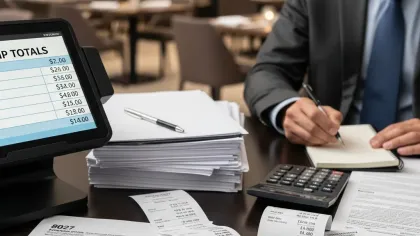
Restaurant tipping rules for 2026: tips vs service charges, tip credits, pooling and tip-outs, and the wage and tax treatment of each.
Read more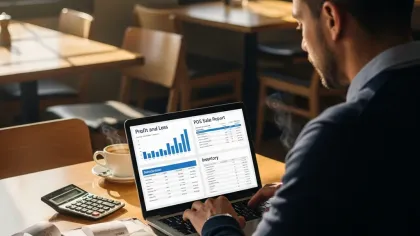
How to read a restaurant P&L like an owner: sales, COGS, labor and the line items that show whether the business actually makes money.
Read more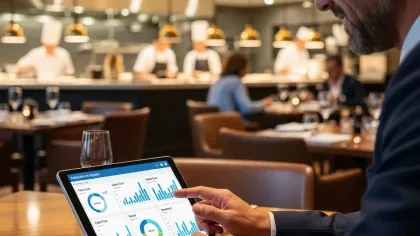
The financial reports and KPIs restaurant owners should monitor: daily sales, P&L, cash flow, prime cost and menu profitability.
Read more
The bookkeeping red flags that signal restaurant trouble: late closes, unreconciled POS, messy AP, and the point where a controller pays for itself.
Read more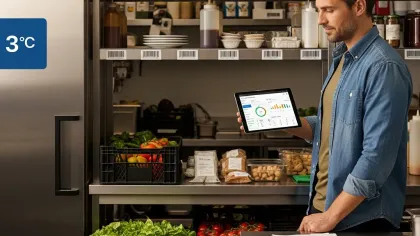
Restaurant inventory management for 2026: FIFO and FEFO, par levels, count SOPs and the tech stack that cuts waste and controls COGS.
Read more
Which Manhattan restaurants owe NYC Commercial Rent Tax: the below-96th-Street rule, the $250,000 rent threshold, credits and how to file.
Read more
Outsourced restaurant bookkeeping pays off when the close runs late, controls are thin, or one hire covers too much. The real math and the tradeoffs.
Read more
AI is changing restaurant accounting, from invoice processing to forecasting. What the tools do well, where they fall short and how to start.
Read more
Plan for slow seasons before the cash crunch: forecasting, cost resets and cash strategies restaurants can set up ahead of the dip.
Read more
A Restaurant365 implementation guide for multi-unit operators: setup order, chart of accounts, POS integration and the mistakes that stall rollouts.
Read more
How AI improves restaurant inventory management: real-time tracking, predictive ordering and waste reduction, and how to put it to work.
Read more
Restaurant industry trends for 2026: labor costs up 41%, AI adoption still under 30%, and consumers trading down, not walking away.
Read more
How mobile POS changes quick service restaurants: faster lines, table-side ordering, cleaner sales data and tighter labor scheduling.
Read more
Generic accountants miss what restaurants need: real-time food and labor cost control. What a restaurant-specific accountant does differently.
Read more
How advanced payroll systems help QSRs manage high turnover, tip compliance and wage rules while cutting admin time for managers.
Read more
How AI is changing quick service restaurants: drive-thru ordering, kitchen automation, forecasting and what adoption looks like in practice.
Read more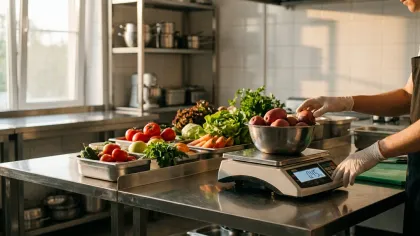
Restaurant food cost percentage should run 28-35% for full-service, lower for QSR, higher for fine dining. See 2026 benchmarks and the formula.
Read more
How restaurants manage workforce challenges: scheduling technology, retention tactics and labor-cost controls that offset rising wages.
Read more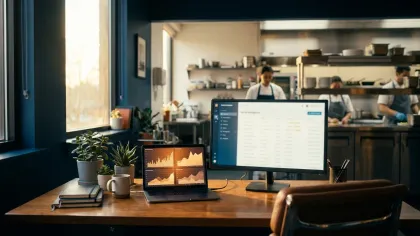
How technology changes restaurant accounting: POS integrations, automated AP and real-time reporting cut manual work and speed up decisions.
Read moreGet clean books, real operations support and a partner who reads the numbers with you.