TL;DR: Pizzerias, sushi bars, and ghost kitchens in Los Angeles don’t cost out the same way a dine-in restaurant does. Third-party delivery platforms take 15 to 30 percent of every order, packaging adds another dollar or more per ticket, and California’s sales tax rules on delivery orders depend on which platform you use. Get these three line items wrong and your bookkeeping understates what delivery is really costing you.
Los Angeles runs on delivery. It’s one of the most delivery-saturated restaurant markets in the country, and that changes what your books need to track. A restaurant bookkeeping setup built for a dine-in-only concept misses the real cost of a pizzeria running 40 percent of its volume through DoorDash, a sushi bar absorbing seafood price swings on top of delivery fees, or a ghost kitchen with no dining room revenue to fall back on at all.
None of this is exotic. It’s arithmetic that most bookkeeping systems simply don’t do by default: platform commission, packaging cost, and sales tax collection responsibility, tracked per order and per concept. This guide walks through what changes for LA’s delivery-heavy restaurant types and where the real cost sits.
How Much Do Third-Party Delivery Platforms Actually Take?
As of mid-2026, DoorDash charges restaurants 15, 25, or 30 percent commission on delivery orders depending on plan tier, plus about 6 percent on pickup orders. Uber Eats charges 20, 25, or 30 percent for delivery after a March 2026 rate increase, plus roughly 7 percent on pickup. Grubhub advertises a lower headline rate of 5 to 20 percent, but that’s a marketing commission only: add its separate 10 percent delivery fee and payment processing, and the effective cost commonly lands between 25 and 35 percent once everything is included.
On a $20 delivery order, that means the restaurant can end up keeping as little as $14, before food cost is even subtracted. If your bookkeeping records delivery sales at face value without separating out the commission, your reported margin on that channel is fiction.
Packaging Is a Real COGS Line, Not an Afterthought
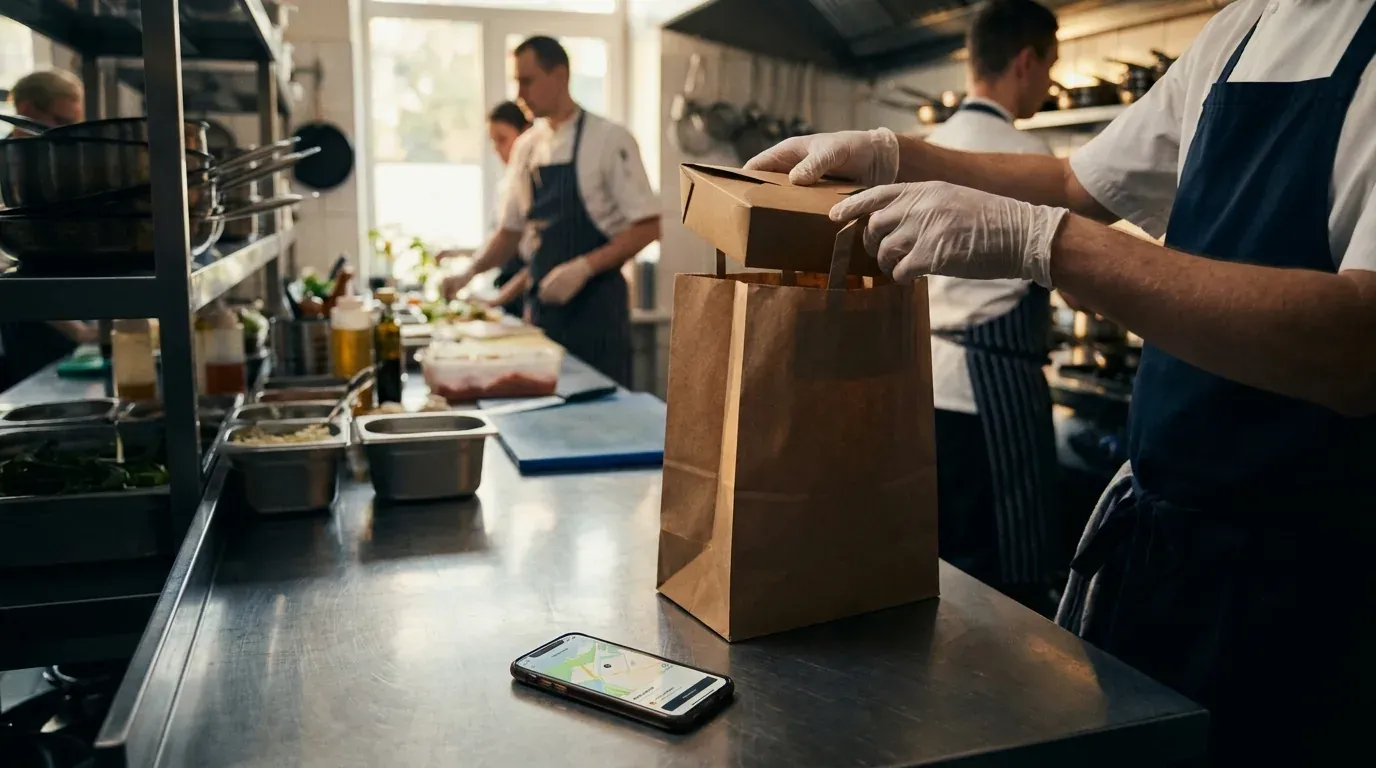
A dining room doesn’t buy containers, lids, bags, or sauce cups. A delivery order does, and that packaging typically runs $1.00 to $1.50 per order, more for anything with multiple components like a sushi platter or a pizza with sides. Most restaurants bury this cost inside general supplies instead of costing it into the dish itself, which means the recipe cost for a delivery order looks lower than it actually is.
The fix is simple bookkeeping discipline: treat packaging as a per-dish cost for delivery items, the same way you’d cost an ingredient. A $25 delivery order with 30 percent commission, standard food cost, and packaging included can leave as little as $8.50 to cover labor, rent, and profit. Skip the packaging line and you’ll never see where that margin actually went.
Who Collects Your California Delivery Sales Tax?
It depends on the platform, and you can’t assume. California’s Marketplace Facilitator Act makes a platform responsible for collecting and remitting sales tax only if that platform has formally elected to be treated as a marketplace facilitator with the California Department of Tax and Fee Administration. A delivery network company is not automatically covered just because it arranges the delivery.
In practice, this means one platform may already be handling your California sales tax on facilitated orders while another leaves that responsibility with you. Check each platform’s own tax documentation for your account rather than assuming all delivery apps work the same way. Getting this wrong in either direction, either failing to remit tax you actually owe or double-remitting on orders the platform already covered, is a cleanup job we see often.
Why Do Delivery Concepts Cost So Differently?
A pizzeria’s ingredients travel well and its food cost is usually predictable, so heavy delivery volume is less risky than it looks. A sushi bar carries far more volatile seafood costs, and stacking a 25 percent commission on top of a raw fish cost that can swing week to week leaves very little room for error if your recipe costs aren’t updated regularly.
A ghost kitchen has it hardest: there’s no dine-in revenue to offset commission costs at all, since 100 percent of its volume runs through the same 25 to 35 percent blended commission rate. A concept doing $1.2 million a year entirely through delivery apps can pay well over $100,000 annually just in platform fees, often more than its entire original build-out cost. Whatever concept you run, the bookkeeping needs to isolate delivery-channel margin separately from dine-in margin. They are not the same business.
Delivery Commission Stacks on Top of LA’s Labor Costs
Los Angeles restaurants are already absorbing some of the highest labor costs in the country. California bans the tip credit entirely, and the City of Los Angeles minimum wage sits at $18.42 an hour as of July 2026, well above the $16.90 state floor. Every tipped employee is paid that full rate before a single tip is counted, which is a very different math than most of the country runs on.
Layer a 25 to 35 percent delivery commission on top of that labor structure and the margin for error shrinks fast. A dish priced to clear a healthy margin in the dining room, where labor is the main pressure, can turn unprofitable the moment it goes out the door through a delivery app, where labor and commission both take a cut. Bookkeeping that tracks channel-level margin separately is the only way to see this before it shows up as a bad month.
Where FORCS Fits In
We handle restaurant accounting and bookkeeping built for exactly this kind of complexity: per-channel margin tracking, packaging costed into COGS correctly, and California sales tax filings reconciled against what each delivery platform actually remitted, not what you assume they did. We also work with LA operators directly on inventory and recipe costing, so delivery-channel numbers reflect real cost, not a dine-in estimate applied to a different business model.
If you run a pizzeria, sushi bar, delivery-first concept, or any restaurant in the Los Angeles market and aren’t sure what delivery is really costing you, book a free consultation. We’ll walk through your actual numbers, not a generic benchmark.
Frequently Asked Questions
How much does restaurant bookkeeping cost in Los Angeles? It varies with volume, number of locations, and how many delivery platforms you run. The bigger cost driver is usually cleanup: books that have not been reconciled for months take far longer to fix than to maintain. Ask any provider what is included at close, because a low monthly fee that stops at data entry leaves the hard part undone.
What should a Los Angeles restaurant look for in a bookkeeper? Someone who has reconciled delivery platform deposits before. Third party orders arrive net of commissions, promotions, and adjustments, and a bookkeeper without restaurant experience will often record the deposit as the sale. That understates both revenue and expenses, and it makes your food cost percentage look better than it is.
Do ghost kitchens and delivery-only concepts need different bookkeeping? Yes. When several brands run out of one kitchen, you need revenue and cost of goods tracked by brand rather than by location, or you cannot tell which concept actually makes money. Shared labor and shared ingredients have to be allocated deliberately, because nothing about that split happens on its own.
Who collects and remits sales tax on delivery orders in California? It depends on whether the platform has elected marketplace facilitator status. When it has, the platform collects and remits. When it has not, that responsibility stays with the restaurant. Do not assume it is handled. Check each platform, since getting this wrong shows up later as an assessment with interest.
How often should a Los Angeles restaurant close its books? Monthly at minimum, and weekly for prime cost. Monthly closes catch problems in time to change something in the next period. Restaurants that close quarterly usually discover a food cost problem a full quarter after they could have fixed it.